The Heavy Burden of Juggling Too Many Payments
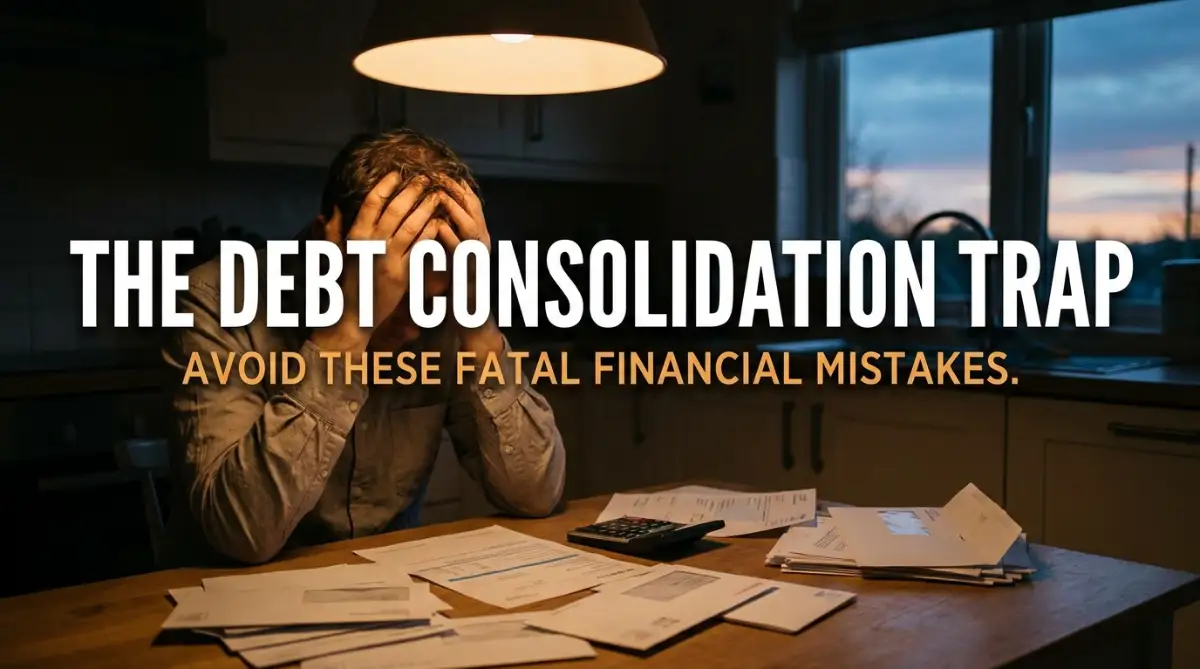
I remember sitting at my kitchen table at two in the morning, staring at six different credit card statements spread out in front of me. My heart was pounding so hard I could actually hear it in my ears. I felt completely suffocated by the endless cycle of minimum monthly payments. Every time I thought I was making a little progress, another massive interest charge would completely wipe it out.
I felt like a complete failure, constantly hiding my money anxiety from my family and friends. I was just moving money around from one account to another, desperately trying to keep my head above water. I honestly thought that getting a consolidation loan would instantly solve all my problems.
This is a terrifying reality that millions of hardworking people face every single day. The mental toll of debt is completely exhausting. You start second-guessing every single purchase you make at the grocery store.
The constant fear of answering your phone because it might be a debt collector completely destroys your peace of mind. We assume that wrapping all our messy debts into one clean payment is a magic fix. But the truth is much more complicated and dangerous.
Every single day, ordinary people unknowingly walk into massive financial traps while trying to fix their credit. They sign new contracts, transfer huge balances, and shut down old accounts without understanding the rules of the game. They have no idea that these simple actions are actively destroying their financial future.
Consolidating your debt can absolutely save your life, but only if you do it the right way. If you make the wrong move, you will end up owing far more money than you did when you started.
Breaking Down the Mechanics of Debt Management
You might think you are doing a smart thing by shifting your high-interest balances onto a brand new loan. However, banks and lenders do not offer these products just to be nice to you. They have highly specific business models designed to make maximum profit off your financial stress.
To truly protect your hard-earned money, we need to completely rethink how we view the consolidation process. It is not just about getting a lower monthly payment on paper. It is about understanding the exact math and psychology behind your money habits.
Let us walk through the most dangerous traps people fall into when trying to organize their credit cards. These are practical, everyday scenarios you must understand before you sign any new financial agreements.
The Illusion of "Freed Up" Credit Limits
The absolute biggest danger of debt consolidation has nothing to do with math. It has everything to do with human psychology and our behavioral habits. When you use a personal loan to pay off four maxed-out credit cards, those card balances instantly drop to zero.
Suddenly, you look at your banking app and see thousands of dollars in available credit staring back at you. This creates a highly deceptive feeling of financial freedom. Your brain tricks you into thinking you suddenly have new money to spend.
This leads directly to the most common financial disaster imaginable. People slowly start using those empty credit cards again for small, everyday purchases. They buy a coffee here, a dinner there, and maybe a new pair of shoes.
Within a few months, those small swipes add up to massive new balances. Now, they are stuck paying the new monthly consolidation loan, plus the new payments on the freshly maxed-out credit cards. They essentially doubled their total debt overnight without even realizing it.
Ignoring the Silent Impact of Origination Fees
Many folks rush into personal loans because the advertised interest rate looks incredibly low. A bank might offer you a loan at seven percent, which sounds amazing compared to your twenty-five percent credit card rate. But lenders are very good at hiding their true costs in the fine print.
Most personal loans come with something called an origination fee. This is a flat percentage the bank charges you simply for processing the paperwork. This fee is almost always deducted directly from the money they hand you.
I made this exact mistake when I first tried to combine my bills. I happily accepted a ten thousand dollar loan, completely ignoring the five percent origination fee buried in the terms. The bank only deposited nine thousand five hundred dollars into my account, leaving me five hundred dollars short of paying off my actual debt!
If you do not factor in these hidden processing costs, your math will be completely wrong. Always ask the lender for the exact, specific dollar amount you will receive after all administrative fees are deducted.
The Deadly Trap of Balance Transfer Costs
Another highly popular method for organizing debt is the zero-percent balance transfer credit card. On the surface, this sounds like the perfect solution to beat high interest rates. You simply move all your debt to a new card and pay absolutely no interest for an entire year.
Are You Falling for the Zero Percent Trap?
Watch this quick breakdown to see how promotional credit card offers secretly cost you hundreds of dollars in hidden fees.
However, these promotional offers usually come with a very strict balance transfer fee. This fee is typically around three to five percent of the total amount you are moving over. If you transfer ten thousand dollars, you instantly owe an extra three hundred to five hundred dollars on day one.
Before you accept a balance transfer offer, you must calculate if the fee is actually lower than the interest you are currently paying. Sometimes, staying with your current card and aggressively paying it down is actually cheaper in the long run.
Destroying Your Credit Utilization Ratio
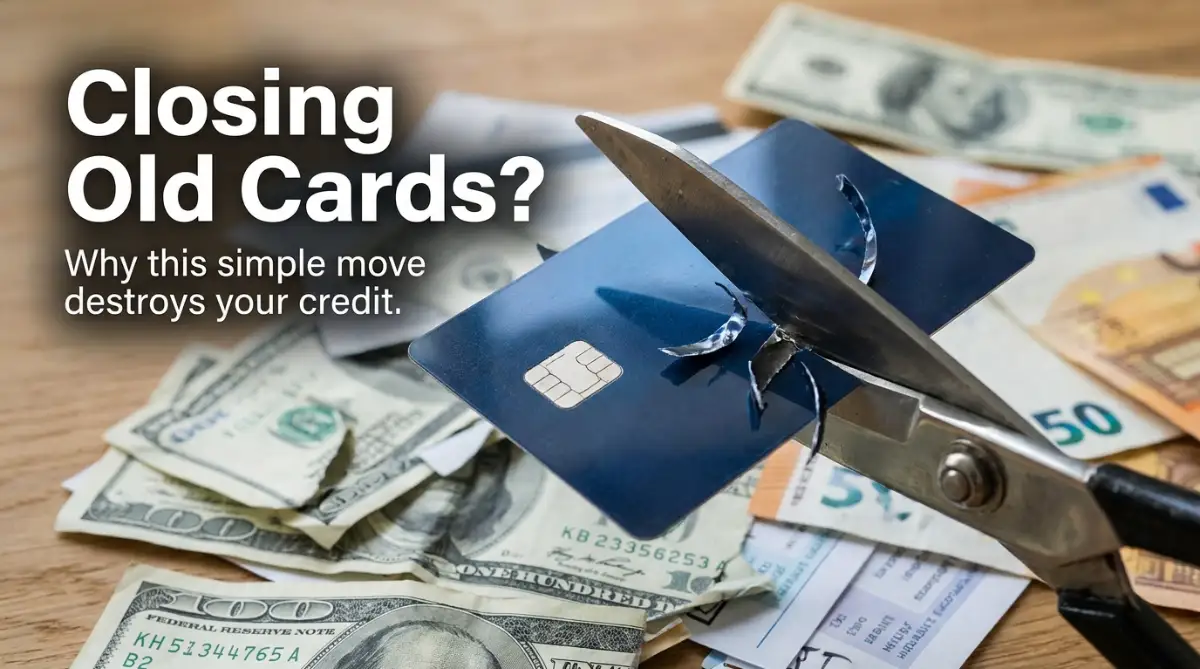
Here is a scenario that confuses almost everyone trying to fix their financial profile. You finally get a consolidation loan and pay off your three oldest credit cards. Because you want to be responsible, you immediately call the banks and cancel those three cards so you cannot use them again.
Your credit score then takes a massive, sudden dive, and you have no idea why. The reason is a complex mathematical formula called your credit utilization ratio. This ratio measures how much debt you owe compared to how much total credit you have available across all your accounts.
Let us break this down with a simple analogy. Imagine you have a bucket that can hold ten gallons of water, and you currently have five gallons inside it. Your bucket is exactly fifty percent full.
If you smash the bucket and replace it with a smaller one that only holds five gallons, your new bucket is now one hundred percent full. The amount of water never changed, but your capacity completely shrank. This is exactly what happens when you close old credit card accounts.
When you close a card, you wipe out that available credit limit from your personal financial profile. Even if your total debt went down, your utilization percentage usually spikes upward. Credit bureaus hate seeing high utilization, so they immediately drop your score.
The Danger of Stretching the Repayment Term
When we are drowning in bills, our primary goal is usually to get a lower monthly payment. We want the pressure off our shoulders right this second. Lenders know this, so they will offer you a consolidation loan with a five or seven-year repayment term.
Stretching the loan out over many years will definitely make your monthly bill much smaller. It feels like a massive relief to your daily budget. But this strategy forces you to pay an incredible amount of extra money in long-term interest.
If you stretch a relatively small debt over seven years, you will end up paying thousands of extra dollars back to the bank. The smart move is to choose the absolute shortest repayment term you can comfortably handle. You want to eliminate the principal balance as fast as humanly possible.
Myth vs Reality: Debt Consolidation Facts
Understanding the difference between financial marketing and actual math is highly necessary. Let us clear up some of the most dangerous misconceptions people believe about combining their bills.
- The Myth: Consolidating debt automatically fixes your bad credit score.
- The Reality: The new loan requires a hard inquiry, which initially drops your score. Your score only improves if you consistently pay on time and keep your other card balances at zero.
- The Myth: A balance transfer card is basically free money for a year.
- The Reality: If you do not pay off the entire balance before the promotional period ends, the bank will often charge you retroactive interest from day one.
- The Myth: Debt consolidation completely erases your old debt.
- The Reality: You did not erase anything at all. You simply moved your exact same mess from one bank to a completely different bank.
Overlooking the Root Cause of the Debt
Financial tools can only fix mathematical problems. They absolutely cannot fix behavioral problems. If you do not change the habits that got you into debt in the first place, consolidation will only make your situation worse.
You need to take a hard, honest look at why you have so many maxed-out credit cards. Was it a sudden medical emergency, or do you have a habit of emotional spending? If you are spending more money than you earn every month, no banking product in the world can save you.
Before you apply for any new loans, you must sit down and track every single dollar you spend for thirty days. You have to build a realistic monthly budget that accounts for your actual living expenses.
If you consolidate your debts without fixing the hole in your spending habits, you will end up right back where you started. Except this time, you will have a loan payment on top of your brand new credit card bills. You must break the cycle of overspending before you try to rearrange your accounts.
Creating a Permanent Defense Strategy for Your Wallet
Now that we fully understand the psychological traps of moving your debt around, we need to build a rock-solid defense system. You cannot just sign a new loan agreement and hope your financial habits magically change overnight. You have to actively build a completely new relationship with your money.
The most successful people do not view consolidation as a magic wand that makes their problems disappear. Instead, they treat it exactly like a medical reset for their bank accounts. They use the lower monthly payment to aggressively attack the root cause of their financial stress.
I want to share some incredibly powerful, advanced strategies that financial experts use to keep their clients out of debt permanently. These are practical, everyday habits that you can start applying to your household budget tomorrow morning.
The "Physical Freeze" Protocol
When you finally pay off a credit card with your new loan, your brain will immediately want to celebrate. You will feel a massive wave of relief, and that relief often leads straight to a shopping mall. To stop this natural human urge, you need to put physical distance between you and your plastic cards.
Many financial advisors recommend the literal "ice block" method for extreme spenders. You place your zero-balance credit cards in a bowl of water and put it in the back of your freezer. If an online sale tempts you at midnight, you physically have to wait hours for the ice to melt, which usually kills the impulse to buy.
If you prefer a digital approach, immediately delete your credit card information from your phone's mobile wallet. Remove the saved card numbers from your favorite online shopping accounts and food delivery apps. Making the checkout process incredibly annoying is the best way to force yourself to rethink a purchase.
Mastering the Cash-Flow Audit
You cannot permanently fix your financial life if you do not know exactly where every single dollar is going. Most people guess how much they spend on groceries or gas, and they are usually wrong by hundreds of dollars. You need to conduct a brutal, honest audit of your cash flow right now.
Sit down with your last three months of bank statements and a bright yellow highlighter. Highlight every single transaction that was not an absolute survival necessity, like rent, basic food, or utilities. You will likely be shocked at how much money vanishes into random subscription services and fast food.
Redirecting this wasted money is how you actually make progress. Instead of wondering where your paycheck went, you actively tell it where to go before the month even begins. This level of strict money management is how you rebuild your credit score after a major setback without relying on expensive banks.
Prioritizing the "Mini" Emergency Fund
Here is a massive secret that most bankers will never tell you when they sell you a loan. If you throw every single spare penny at your new combined debt, you are completely vulnerable to sudden life emergencies. The moment your car needs a new transmission, you will have no cash, forcing you straight back to the credit cards.
Before you start aggressively paying down your new loan, you absolutely must save a basic one-thousand-dollar emergency fund. This cash sits in a separate, hard-to-reach savings account and acts as a shock absorber for your life. It ensures that a flat tire remains a minor annoyance rather than a complete financial disaster.
I learned this the hard way during my own debt journey. I aggressively paid off a huge chunk of my loan, only to face an unexpected medical bill two weeks later. Because I had no cash buffer, I had to put the hospital bill on a high-interest credit card, completely ruining my progress. Always build your cash buffer first.
Understanding Debt Snowball vs. Avalanche
Once your emergency fund is secure, you need a mathematical strategy to destroy the remaining loan balance. You can follow the "Avalanche method," where you mathematically target the debt with the absolute highest interest rate first. This saves you the most money on paper, but it can feel incredibly slow and discouraging.
Alternatively, you can use the "Snowball method," which targets the smallest dollar balance first, regardless of the interest rate. According to fascinating behavioral research published by Harvard Business Review, people who use the Snowball method are actually much more likely to become debt-free. Getting those quick, small wins gives your brain a massive hit of dopamine, keeping you motivated for the long journey.
You need to pick the psychological method that actually matches your personality. If you need constant motivation, start snowballing your smallest bills immediately.
Avoiding the Fake Relief of Long Terms
When reviewing your new loan contract, the bank will always try to push you toward a five or seven-year repayment term. They do this because a longer term makes your monthly payment look incredibly tiny and easy to manage. However, this is exactly how they maximize their profits from your struggle.
If you take a ten-thousand-dollar loan and stretch it over seven years, you will pay a small fortune in hidden interest. You should always demand the shortest repayment schedule that you can safely afford without starving. The goal is to get out of the banking system entirely, not to remain a profitable customer for a decade.
If you are already trapped in a long-term contract, you need to understand the hidden truth about installment loan debt and start making extra principal payments. Just adding an extra fifty dollars a month toward the principal can shave entire years off your final payoff date.

The Catastrophic Pitfalls Waiting for You
Even with a perfect plan on paper, human emotion often gets in the way of logical financial decisions. We get tired, we get stressed, and we slowly slide back into our old, comforting habits. When you are managing a massive debt restructuring, a single emotional mistake can ruin years of hard work.
I have seen incredibly smart, hardworking people completely destroy their financial lives because they ignored a few basic red flags. The banking industry relies heavily on consumers making these exact predictable errors. They build their entire profit models around the assumption that you will eventually slip up.
Let us walk through the most devastating traps that catch people off guard after they consolidate their accounts. By recognizing these emotional triggers early, you can protect your wealth from completely evaporating.
The Trap of "Lifestyle Creep"
The absolute most common disaster happens exactly three months after the new loan is approved. Because the consolidation lowered your total monthly payments by three hundred dollars, you suddenly feel rich again. You look at your checking account and see extra breathing room that you have not felt in ages.
Instead of throwing that extra three hundred dollars at the new loan principal, you decide you "deserve a reward" for your hard work. You upgrade your phone, start eating out at expensive restaurants, or take a small weekend vacation. This psychological phenomenon is known as lifestyle creep, and it is a silent wealth killer.
Within a year, you have completely absorbed that extra cash flow into your normal daily spending. You are living exactly on the edge of your paycheck again, but now you have a massive bank loan hanging over your head. If you want to know the real reason your financial strategy fails, it almost always starts with unmonitored lifestyle creep.
Do This Instead: The absolute best way to fight lifestyle creep is to automate your success. On the exact day your paycheck hits your account, set up an automatic transfer that pushes that extra three hundred dollars straight to your loan balance. If you never see the money in your checking account, you cannot emotionally spend it on things you do not need.
Falling for the "Variable Rate" Bait
When you are desperately searching for approval, you might accept a loan offer that features a variable interest rate. The lender will heavily advertise a super low introductory rate, making the monthly payment look incredibly attractive. What they hide in the fine print is that this rate is directly tied to the national economic index.
If the central bank decides to raise interest rates to fight inflation, your personal loan payment will suddenly skyrocket overnight. I have seen families panic as their manageable monthly bill suddenly jumped by over two hundred dollars in a single month. This unpredictable shock can completely destroy your carefully planned household budget.
Always demand a fixed interest rate on any personal loan you sign, even if the starting rate is slightly higher. A fixed rate gives you absolute certainty and protects you from wild economic shifts. You can review guidelines from the Consumer Financial Protection Bureau (CFPB) regarding how to evaluate loan terms safely.
The Disaster of Co-Signing
Sometimes, your credit score might be too damaged to qualify for a good consolidation loan on your own. The bank representative might casually suggest that you bring in a family member or spouse to co-sign the agreement. This sounds like an easy workaround, but it is one of the most toxic financial decisions you can possibly make.
When someone co-signs for you, their personal credit history becomes permanently chained to your daily habits. If you lose your job and miss a single payment, the bank will immediately attack their credit score without warning. I have seen healthy marriages and tight-knit families completely fall apart because of the deep resentment caused by a defaulted co-signed loan.
If you cannot qualify on your own merit, it is a glaring sign that you are not ready for more credit. You need to focus on protecting your personal assets from unexpected liabilities rather than dragging your loved ones down with you.
Relying on Predatory Debt Settlement Companies
If you feel completely overwhelmed, you might be tempted to call one of those late-night TV commercials promising to "erase your debt instantly." These companies are usually debt settlement agencies, not actual lenders. They charge you massive upfront fees and instruct you to stop paying your credit cards entirely.
Their strategy is to intentionally ruin your credit score so the banks get scared and agree to settle for pennies on the dollar. During this process, you will be relentlessly harassed by aggressive debt collectors and possibly even sued in civil court. Many of these companies take your money and provide absolutely zero legal protection when the lawsuits start arriving.
If you are truly drowning and cannot afford a basic loan, you should seek non-profit help instead of commercial companies. Reaching out to organizations endorsed by the National Foundation for Credit Counseling (NFCC) is a much safer way to get honest, unbiased advice.
Borrowing Against Your Retirement Future
The absolute saddest mistake I see is when desperate people drain their 401(k) or personal retirement accounts to pay off credit cards. You might think you are simply borrowing money from your future self to fix a problem today. However, the government heavily punishes you for touching that money early.
If you pull cash out of a retirement account, you will instantly face a massive tax penalty, sometimes losing thirty percent of your money immediately. Furthermore, you lose decades of beautiful compound interest that would have funded your elderly years. You are literally sacrificing your future financial dignity just to satisfy a plastic card.
Never use secured retirement assets to pay for unsecured consumer debt. If things get truly impossible, bankruptcy might even be a mathematically smarter choice than draining your retirement savings. Always consult with a certified financial planner before touching your retirement funds.
Your Action Plan for Total Debt Freedom
We have covered a massive amount of intense financial psychology today. You now hold the exact blueprint to avoid the terrifying mistakes that keep millions of people trapped in the rat race forever. You are no longer guessing; you are operating with total clarity.
The absolute worst thing you can do right now is close this page and change nothing about your daily routine. Financial freedom is not a spectator sport; it requires aggressive, immediate action. You need to take control of your numbers before the banks take control of your life.
The 24-Hour Checklist
Here is exactly what you need to do within the next twenty-four hours to regain control:
- Log into your banking app and write down the exact balance, interest rate, and minimum payment for every single debt you owe.
- Calculate your true cash flow by printing your last thirty days of transactions and highlighting the wasted spending.
- Call your credit card companies and politely ask if they have any internal hardship programs or lower interest rates available before you try to consolidate.
- Remove all saved card numbers from your web browser and online shopping accounts to instantly kill impulse buying.
You absolutely have the power to defeat this heavy burden. You are incredibly capable of learning new habits, shifting your mindset, and building a secure life for your family. Debt is just a math problem, and every single math problem has a clear, actionable solution.
I know exactly how suffocating it feels to wake up every morning worrying about money. But I also know the unbelievable peace that comes when you finally take control and break those chains. Start auditing your budget tonight, be honest with yourself, and never let a bank dictate your future again.
Common Questions About Managing Your Credit Card Balances
Will getting a new loan instantly drop my current credit score?
Yes, it usually drops your score by a few points initially because the bank performs a "hard inquiry" on your file. However, if you use the loan to pay off your credit cards and keep those card balances at zero, your score will usually rebound quickly within a few months.
Should I aggressively close my credit cards right after I pay them off?
Absolutely not. Closing your oldest accounts completely destroys your total credit utilization ratio and wipes out your long credit history. The smartest move is to keep the accounts open, cut up the physical plastic, and let them sit empty.
What exactly is a zero-percent balance transfer fee?
Even if a credit card offers you zero percent interest for a year, they almost always charge a massive upfront transfer fee. This fee is usually three to five percent of the total money you move over, meaning a ten thousand dollar transfer costs you up to five hundred dollars immediately.
Can I try to consolidate my debts again if I mess up the first time?
You technically can, but banks will see this as a massive red flag indicating financial instability. If you rack up high balances while already holding a consolidation loan, lenders will likely deny your second application or charge you incredibly toxic interest rates.
Is credit counseling a better option than taking out a new loan?
If your credit score is already ruined or you cannot control your spending habits, a non-profit credit counseling agency is often a much safer choice. They can negotiate lower interest rates directly with your creditors without forcing you to take on a brand new, risky bank loan.
Disclaimer: The information provided in this article is strictly for educational and informational purposes and does not constitute professional financial or legal advice. Every individual's financial situation is entirely unique. Always consult with a certified financial planner or a licensed credit counselor before making major decisions regarding debt consolidation or bankruptcy.