Surviving the Crash: My Life After a Major Financial Setback
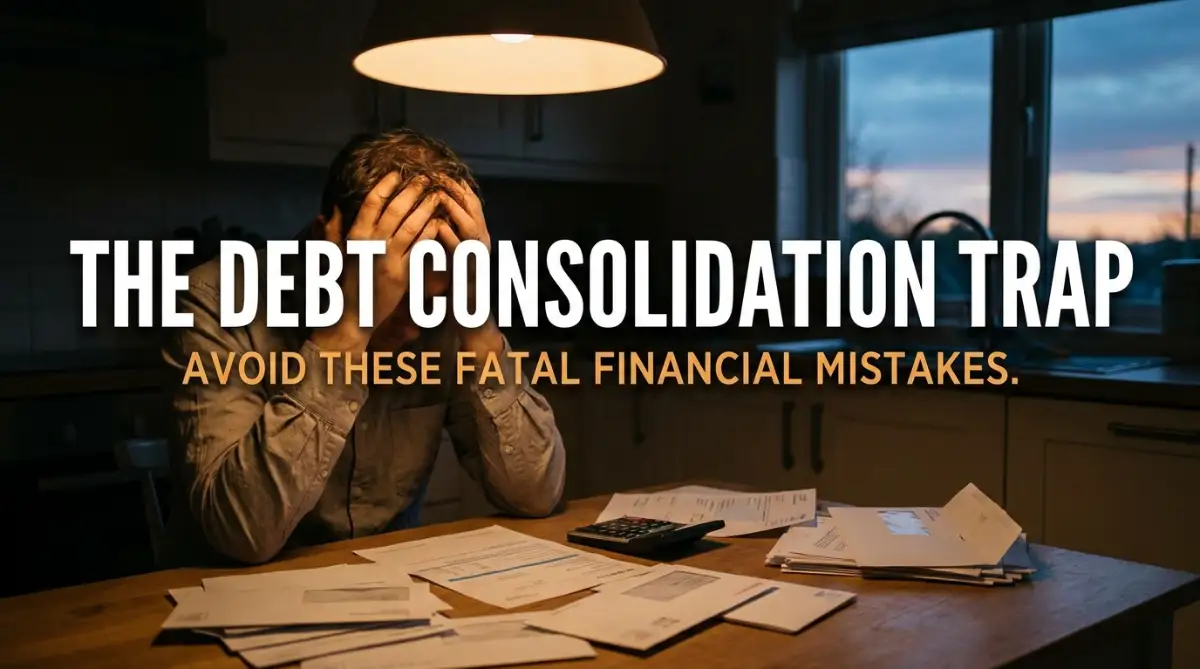
I remember the exact moment my stomach dropped into my shoes. My phone buzzed with yet another angry text from a debt collector, and I just wanted to hide under the covers forever. I had defaulted on a massive personal loan, and my credit score basically fell off a cliff overnight.
Looking at that terrible three-digit number made me feel like a complete failure. I honestly thought my financial life was ruined forever and I would never get back on track. But I eventually learned that a bad score is just a temporary roadblock, not a life sentence.
Living with a destroyed credit profile is incredibly exhausting. Everyday life suddenly turns into a giant obstacle course. You apply for a simple apartment, and the landlord rejects you the second they run your background check. You try to get a basic cell phone plan, and the company asks for a massive security deposit that you simply cannot afford.
The worst part is the constant, nagging fear. Every time an unknown number pops up on your screen, your heart starts racing. You avoid opening your mailbox because you know it is just going to be more threatening letters from collection agencies.
This financial stress spills over into your personal life, completely ruining your peace of mind. You start losing sleep, snapping at your loved ones, and feeling an overwhelming sense of shame. You feel trapped in a hole that just keeps getting deeper no matter how hard you try to climb out.
But here is the honest truth about debt and default. Lenders do not care about your feelings, but they do care about your current actions. The system is entirely built on math, and math can be fixed if you know the right formulas.
If you are currently sitting there feeling hopeless about your financial future, take a deep breath. You are definitely not the first person to experience a loan default, and you will certainly not be the last. Today, we are going to walk through the exact steps you need to take to clean up this mess and start fresh.
Breaking Down the Wall: Where Do You Even Start?
When you are dealing with the aftermath of a defaulted loan, your first instinct is usually to panic or ignore the problem entirely. Ignoring the issue is the absolute worst thing you can do. The very first step to fixing your financial reputation is finding out exactly how much damage has been done.
Think of your credit report as a medical record for your finances. You cannot treat an illness if you do not know exactly what is wrong with your body. You need to pull your official reports from the major bureaus and look at the ugly truth.
Do not worry about the score just yet. Look at the actual accounts listed on the document. You are looking for the exact date the default happened, the name of the collection agency holding the debt, and the total amount they claim you owe.
Myth vs Reality: Understanding Your Credit File
Myth: A loan default will stay on your record forever and ruin your life permanently.
Reality: Negative marks fall off your report after a specific number of years. More importantly, the impact of a default hurts your score less and less as time passes, especially if you add new positive history.
Once you have your reports in front of you, grab a red pen and start hunting for mistakes. You would be absolutely shocked by how many errors exist on these official documents. Sometimes a debt is listed twice, or the balance is completely wrong.
If you find a mistake, you have the legal right to dispute it. When you challenge a negative item, the reporting agency has a limited time to investigate. If the collection agency cannot prove the debt belongs to you with hard evidence, the bureau must delete it from your file.
The Negotiation Phase: Dealing with Debt Collectors
Dealing with debt collectors can be incredibly intimidating. They are trained to make you feel scared so you will pay them as fast as possible. But you actually have a lot more power in this situation than you think.
If the debt is valid and you actually owe the money, you need to set up a payment plan or a settlement. A settlement means you agree to pay a lump sum that is less than what you actually owe, and in return, they consider the account closed.
When I was trying to clean up my messy credit file, I realized something crazy about collection agencies. I found out they often buy dead accounts for pennies on the dollar, meaning they are usually willing to settle for way less than you actually owe. I started offering them thirty percent of the original amount, and you would be surprised how many of them said yes right away.
The "Pay for Delete" Strategy
If you have the cash to settle an account, you should always try a strategy called Pay for Delete. This is a specific negotiation tactic where you agree to pay the debt, but only if they agree to remove the negative mark from your report entirely.
You must get this agreement in writing before you hand over a single penny. If you just talk to them on the phone and they promise to delete it, they will probably take your money and leave the bad mark on your record. Always protect yourself with written proof.
Rebuilding Trust: How to Add Positive History
Once you stop the bleeding by handling the defaults, you have to start building fresh, positive history. This is where most people get stuck. Nobody wants to lend you money because your score is low, but you need someone to lend you money so you can raise your score.
This is where a secured credit card becomes your best friend. A secured card works just like a regular card, but you have to put down a cash deposit first. If you want a limit of two hundred dollars, you give the bank two hundred dollars upfront.
This removes all the risk for the bank. If you fail to pay your bill, they just keep your deposit. But every month you make an on-time payment, they report that good behavior to the bureaus.
When you get your secured card, treat it like a dangerous tool. Only use it for one small subscription a month, like your favorite streaming service. Then, set up automatic payments so the bill is paid in full every single month without you even thinking about it.
Understanding the Power of Credit Utilization
Your credit utilization ratio is basically a fancy term for how much money you owe compared to how much credit you have available. This one single factor makes up a massive chunk of your overall score.
If your card has a limit of one thousand dollars, and you spend nine hundred dollars, lenders think you are desperate for cash. You want to keep your utilization below ten percent at all times.
A great trick to keep this number low is to pay your bill multiple times throughout the month. Do not wait for the statement to arrive in the mail. If you buy groceries on Tuesday, go into your banking app and pay off that exact amount on Wednesday.
Credit Builder Loans: The Hidden Secret
If you do not want a credit card, or you want to speed up the process, you should look into a credit builder loan. These are special loans designed entirely to help people build positive payment history.
Instead of giving you the money upfront, the bank puts the loan amount into a locked savings account. You make small monthly payments to the bank. Once you pay off the total amount, they unlock the savings account and hand you the money.
It is basically a forced savings plan that also builds your financial reputation. Community banks and local credit unions are usually the best places to find these programs. They are incredibly safe and highly effective.
Becoming an Authorized User
If you have a family member or a very close friend who has excellent financial habits, you can ask them for a huge favor. Ask them to add you as an authorized user on one of their oldest credit cards.
You do not even need them to give you the physical card. Just by being attached to their account, their long history of perfect payments will instantly show up on your report. This can give your score a massive, rapid boost.
However, you must be extremely careful with this strategy. If your friend suddenly maxes out their card or misses a payment, that bad behavior will also show up on your report. Only do this with someone you trust completely.
Reporting Your Everyday Bills
Did you know that paying your rent and utility bills on time usually does nothing for your score? This is incredibly frustrating because these are often our biggest monthly expenses.
Luckily, there are new services available that will link to your bank account and report your rent, phone, and utility payments to the bureaus. This is a brilliant way to build positive history without taking on any new debt at all.
You get credit for the money you are already spending to survive. It might only boost your score by a few points a month, but every single point matters when you are recovering from a default.
Changing Your Financial Mindset
All the tactics in the world will not help you if you do not change the habits that led to the default in the first place. Rebuilding your score requires a complete mental shift in how you view money.
You have to start seeing debt as a heavy chain rather than a tool for buying things you cannot afford. Stop using credit to fund a lifestyle that does not match your actual income.
The biggest safety net you can build for yourself is a solid emergency fund. Most defaults happen because of an unexpected medical bill, a car repair, or a sudden job loss. If you have cash saved up, you never have to rely on credit cards during an emergency.
Building the Emergency Buffer
Start incredibly small. Aim to save just five hundred dollars. Keep that money in a separate account that is slightly difficult to access.
Once you hit five hundred, push for one thousand. Having that cash buffer gives you an incredible sense of peace. When your car breaks down, it becomes an annoyance rather than a complete financial disaster.
Patience is Your Best Strategy
The absolute hardest part of this entire journey is being patient. We live in a world where we expect instant results. But repairing financial damage takes time, consistency, and discipline.
You might do everything perfectly for three months and only see your score go up by five points. That can be incredibly discouraging. You might feel like all your hard work is entirely pointless.
But you have to trust the math. As the old negative marks age, their impact fades. As your new positive payments stack up, your foundation gets stronger.
Suddenly, you will cross a threshold, and your score will start jumping up much faster. Lenders will start sending you regular credit card offers again. You will finally be able to rent an apartment without feeling terrified of the background check.
Rebuilding after a major default is a marathon, not a sprint. Every single on-time payment you make is a brick in the new financial house you are building. Keep your head down, stick to your budget, and never let one past mistake define your entire future.
Beyond the Basics: Next-Level Credit Recovery Strategies
Now that we have covered the absolute basics of stopping the financial bleeding, we need to look at some advanced moves. These are the specific strategies that separate people who stay stuck with bad scores from those who bounce back incredibly fast. You do not need a degree in finance to use these methods. You just need to be organized and willing to put in a little bit of extra effort.
One of the most powerful secrets in the financial world is the "Goodwill Adjustment" technique. Sometimes, before an account completely defaults, you might have a string of thirty-day or sixty-day late payments. Even if you settle the main default, those individual late marks stay on your report and drag your numbers down.
If you have been behaving perfectly with your money lately, you can actually write a physical letter to the original lender. You politely explain what went wrong in your life, show them your recent good behavior, and simply ask them to remove the late marks out of pure kindness. It sounds crazy, but human beings read these letters, and they actually approve these requests more often than you might think.
You also need to understand how the scoring algorithm looks at your overall financial profile. The system loves to see that you can handle different types of debt responsibly. This is known in the banking world as your credit mix, and it makes up a solid ten percent of your overall score calculation. If you only have one secured credit card, your profile looks a little bit thin to future lenders.
This is why understanding how different types of credit scores are calculated is so important for your long-term strategy. You want to eventually show that you can manage both revolving accounts, like cards, and installment accounts, like small personal loans. If you are ever confused about how these loans actually work, you should take some time to read about understanding unsecured borrowing limits so you do not make any uninformed decisions.
Another amazing modern trick is using alternative data to boost your financial reputation. In the past, only credit cards and big bank loans counted toward your score. Today, you can use free tools provided by the major reporting bureaus to link your daily banking history directly to your credit file.
If you regularly pay for streaming services, high-speed internet, or even your water bill, these platforms will scan your bank account for those on-time payments. They will instantly add those positive habits to your report, which can give you a quick bump of ten or fifteen points literally overnight. It is basically free credit history for the money you are already spending just to live your life.
However, you must be extremely careful when trying to add new accounts to your name. Every single time you apply for new money, the bank does a "hard pull" on your report. Each hard pull temporarily drops your score by a few points.
If you get rejected for a card on Monday, do not panic and apply for five more cards on Tuesday. That makes you look completely desperate to the algorithm, and your score will tank even further. You should wait at least six months between any new applications to keep your profile looking safe and stable. You can always check the official guidelines on credit reporting from the government if you want to know exactly who is looking at your personal data.

The Trap Doors: Financial Blunders That Will Set You Back
When people decide they finally want to fix their financial mess, they often get overly excited and start making very poor decisions. Repairing your reputation is like walking through a minefield. One wrong step can undo months of hard work.
The most common emotional mistake people make is the "Rage Quit". After dealing with the stress of a default, they get so angry at the banking system that they decide to close down all their old, paid-off credit accounts. They think cutting up the cards and shutting the accounts will keep them safe from future debt.
This is an absolutely massive mistake. Fifteen percent of your total score is based entirely on the average age of your accounts. If you close an account you have had for five years, you are essentially throwing away a glowing five-year resume. Keep your oldest accounts open forever, even if you just buy one pack of gum a month to keep them active.
Another terrifying trap is something financial experts call "Zombie Debt". Let us say you defaulted on a medical bill seven or eight years ago, and it finally fell off your official report. Suddenly, a shady collection agency calls you and demands fifty dollars to make the problem go away.
You might think paying fifty bucks is a cheap way to get them off your back. But the second you make that payment, you officially acknowledge the debt is yours. This completely resets the statute of limitations, and that old, dead default comes back to life and ruins your score all over again. You should always read up on the rules regarding time-barred debts before you ever agree to pay a collection agency over the phone.
We also have to talk about the shady world of credit repair magicians. When you are feeling desperate, you will start seeing advertisements for companies promising to erase your bad history in thirty days for a huge fee. These companies are almost always selling empty promises.
Nobody can legally remove accurate, negative information from your history before the time limit expires. These scam artists just send out hundreds of fake dispute letters, hoping the bureaus get overwhelmed and temporarily hide the bad marks. When the bureaus figure out what is happening, the bad marks come right back, and you are out hundreds of dollars. If something sounds too good to be true, you should learn how to spot these common credit repair scams to protect your wallet.
Designing Your Long-Term Protection Plan
Getting your numbers back to a respectable level is only half the battle. Keeping them there requires a permanent shift in how you handle your daily cash flow. You cannot treat good financial habits like a temporary diet.
The easiest way to protect yourself from future defaults is complete automation. Human beings are forgetful, and life gets incredibly busy. You should never rely on your own memory to pay a bill on time.
Set up every single minimum payment on auto-pay directly from your checking account. Even if you plan to pay the full balance later in the month, having the minimum payment automated guarantees you will never accidentally get a thirty-day late mark. Managing your monthly cash flow is much easier when you focus on creating a realistic monthly budget that runs on autopilot.
You also need to treat your credit utilization like a delicate game. I like to imagine my credit limit as a heavy backpack. If the backpack can hold one thousand pounds, but I only put fifty pounds inside it, I look incredibly strong and responsible to the banks.
If I stuff nine hundred and ninety pounds into that backpack, I look like I am about to collapse under the pressure. Keep your balances tiny. If you use your card for a big purchase to get the reward points, go into your app and pay it off the very next morning. This keeps your reported balance at zero, which makes the scoring algorithm incredibly happy.
Preparing for Major Life Purchases
Eventually, all this hard work is going to pay off, and you will want to use your restored reputation to buy a car or a house. But you have to prepare your profile specifically for these big events. Mortgage lenders look at your history much closer than a standard credit card company.
They do not just look at your score; they look at your entire financial health. They want to see that your monthly payments are very small compared to your monthly salary. If you plan to buy a home, you must understand how managing your debt-to-income ratio is just as important as the three-digit number on your file.
If your score is still recovering and you absolutely must take out a loan for a car or home repairs, you have to be smart about the interest rates. Do your homework and learn the differences between fixed or variable personal loans. A variable rate might look cheaper today, but it can skyrocket next year and push you right back into the danger zone of another default.
If you are planning to become a homeowner, give yourself at least twelve to eighteen months of perfect behavior before applying. Take the time to actively fix your low credit score before getting a home loan. A slightly better score can literally save you tens of thousands of dollars in interest over a thirty-year mortgage.
Your Next Steps Toward Financial Freedom
Recovering from a massive financial mistake is never easy, but it is entirely possible if you follow the right blueprint. You have learned how to face the reality of your reports, negotiate with collectors, and strategically build fresh, positive history. You also know exactly which dangerous mistakes to avoid as you move forward.
Remember that every single day is a brand new opportunity to make better money choices. Your past mistakes do not define your worth as a human being, and they certainly do not have to dictate your future. Just keep stacking those small, positive habits day after day.
I know the journey feels incredibly long and frustrating when you are standing at the bottom of the mountain. But my own life completely changed when I finally stopped feeling sorry for myself and started taking real action. You have the exact same power to rewrite your financial story starting today.
Real Questions From Everyday People About Credit Recovery
How long does a major default actually stay on my record?
A standard loan default or collection account generally stays on your report for seven years from the date of the very first missed payment. However, the damage it does to your score fades significantly after the first two years, especially if you add new positive accounts.
Can I ever buy a house if I have a past default?
Yes, you absolutely can get approved for a mortgage with a past default. Most lenders just want to see that the old debt is fully resolved and that you have rebuilt at least twelve to twenty-four months of perfect payment history since the incident.
Should I just file for bankruptcy to wipe the slate clean?
Bankruptcy should always be your absolute last resort when you have completely exhausted all other options. It will wipe out most of your debts, but it stays on your public record for up to ten years and completely destroys your borrowing power for a very long time.
Does checking my own score constantly make it go down?
No, checking your own personal reports through a monitoring service is considered a "soft pull" and does not hurt your score at all. You can check your own numbers every single day without any negative consequences whatsoever.
Why did my score drop when I finally paid off my loan?
When you pay off an installment loan, that specific account is marked as closed, which slightly changes your overall credit mix. It is completely normal to see a tiny, temporary drop in your numbers, but they will bounce right back up within a month or two.